The Gap House
.png)

Project Overview
This new residence in The Gap replaces an existing home on a steeply sloping 1,000m² site, navigating a demanding set of site constraints to deliver a house that earns its place in the landscape. The clients — both doctors — are remaining in the existing dwelling during construction, with the current home to be demolished once they move into the new one. A waterbody along the eastern boundary, a cluster of protected trees, and a BAL-12.5 bushfire rating each shaped the design in concrete ways. An arboricultural consultant was engaged early in the process to assess which trees could be removed and which had to be retained, with those findings directly influencing the building footprint and site planning. Because the property is not connected to the municipal sewer network, a wastewater consultant was brought in to design a compliant on-site effluent management system — adding a layer of technical coordination that informed both the civil strategy and the layout of service areas.
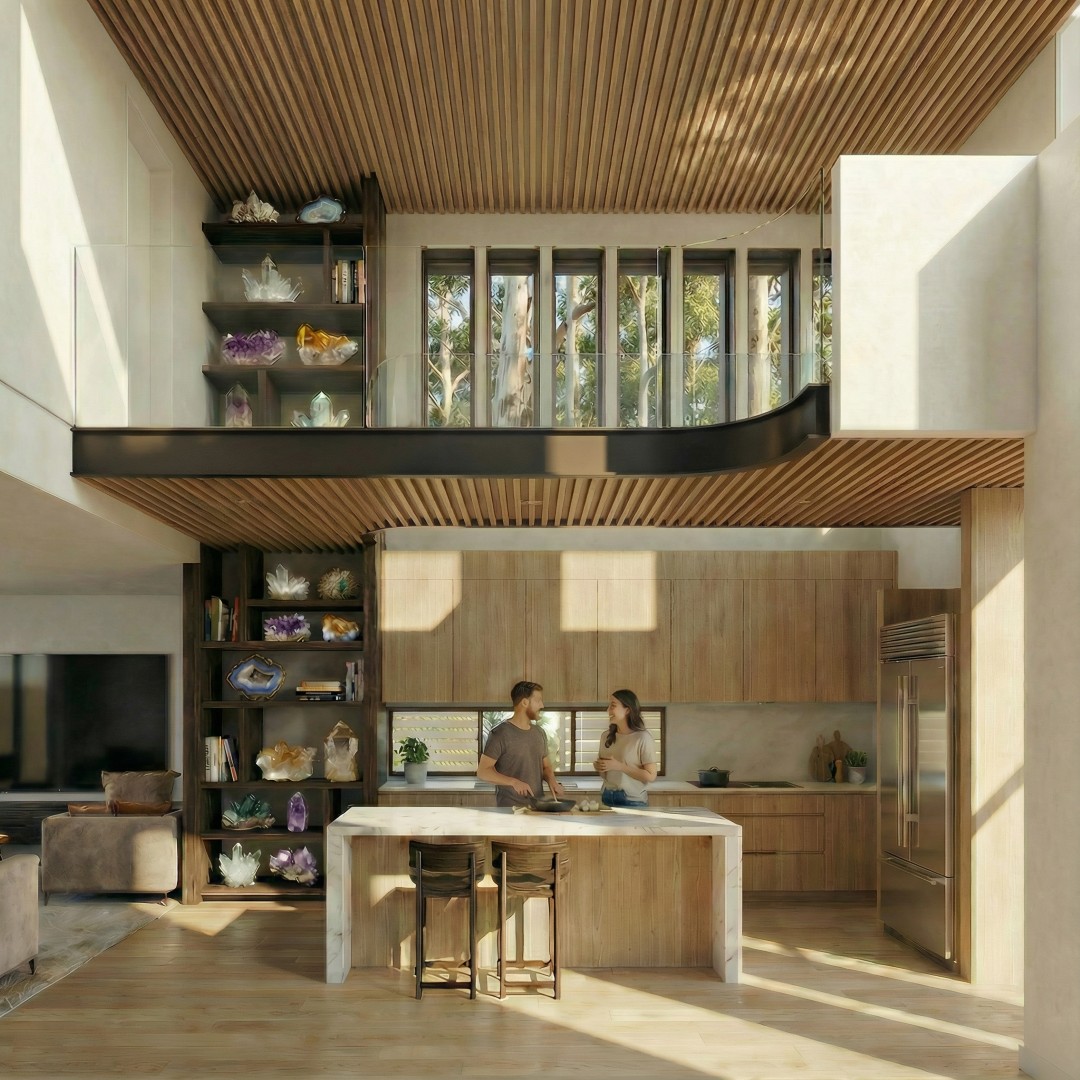
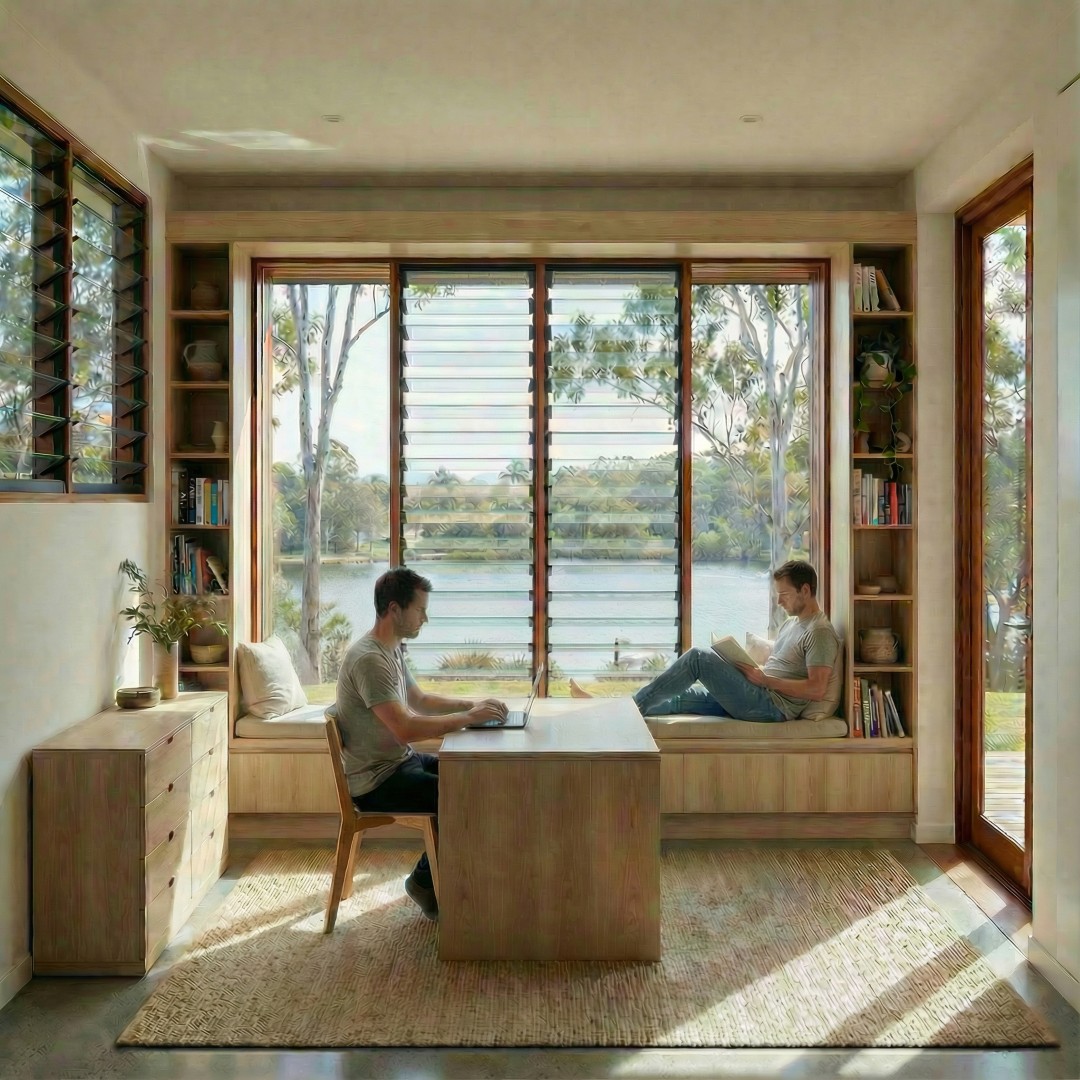
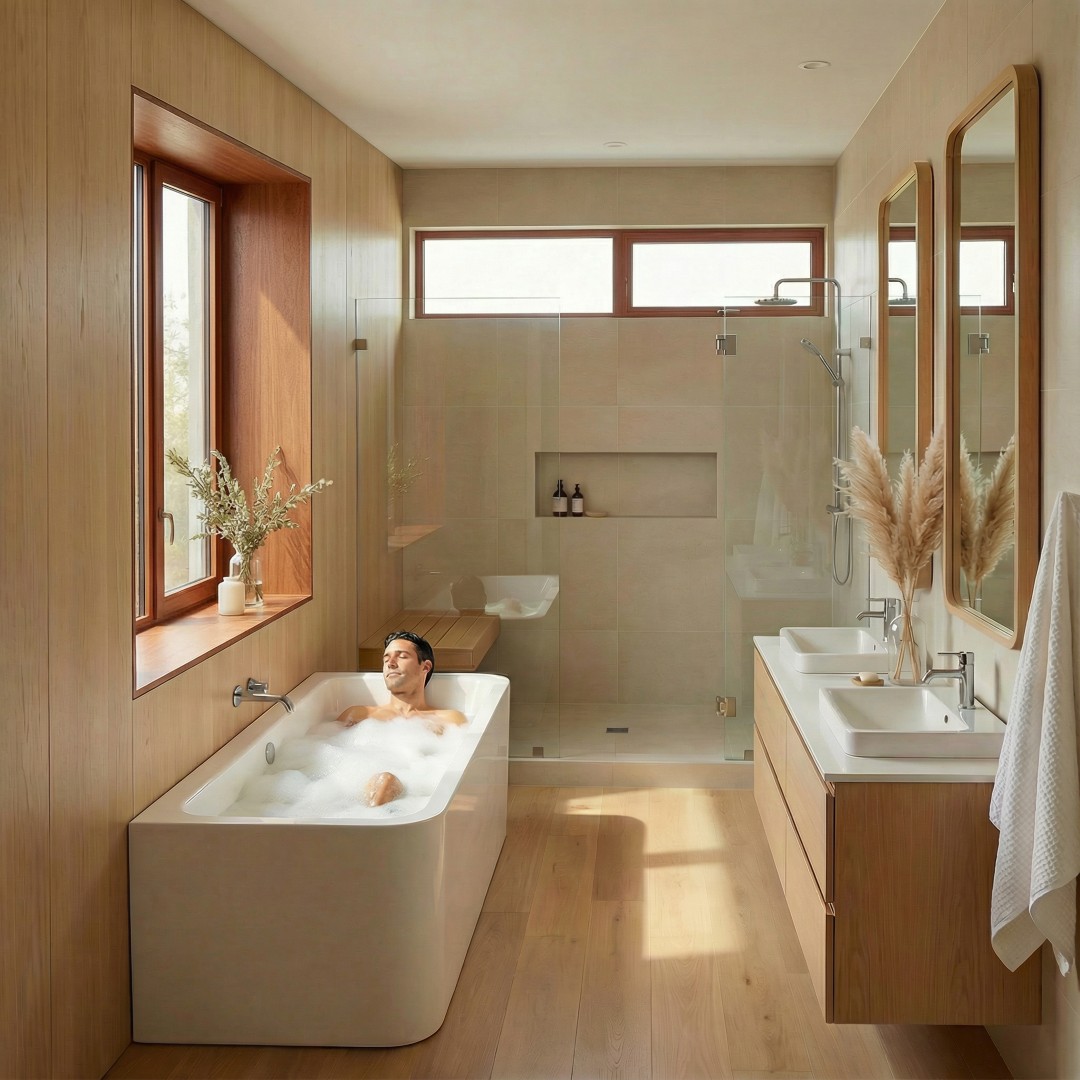
The brief centred on three bedrooms — one of which doubles as a dedicated office — two bathrooms including an ensuite with bath, and an open-plan living area anchored by a generous kitchen with butler's pantry. The clients' passion for cooking drove the kitchen dimensions; their preference for honest, durable materials shaped everything else. Low maintenance was a core requirement, not an afterthought. Their mineral collection — built over many years and meaningful to both of them — was incorporated as a prominent display feature running alongside the kitchen island and into the lounge, becoming one of the defining interior moments of the home.
The sloped site made a suspended structure unavoidable, and the design leans into it. A hybrid floor system — concrete slab at ground level transitioning to suspended timber above — creates an undercroft that nestles into the hillside rather than fighting it. The building steps with the site, and the undercroft becomes a resolved part of the composition rather than an engineered necessity hidden from view. Drone photography during design identified key sight lines that influenced window orientations and the placement of living spaces across both floors.
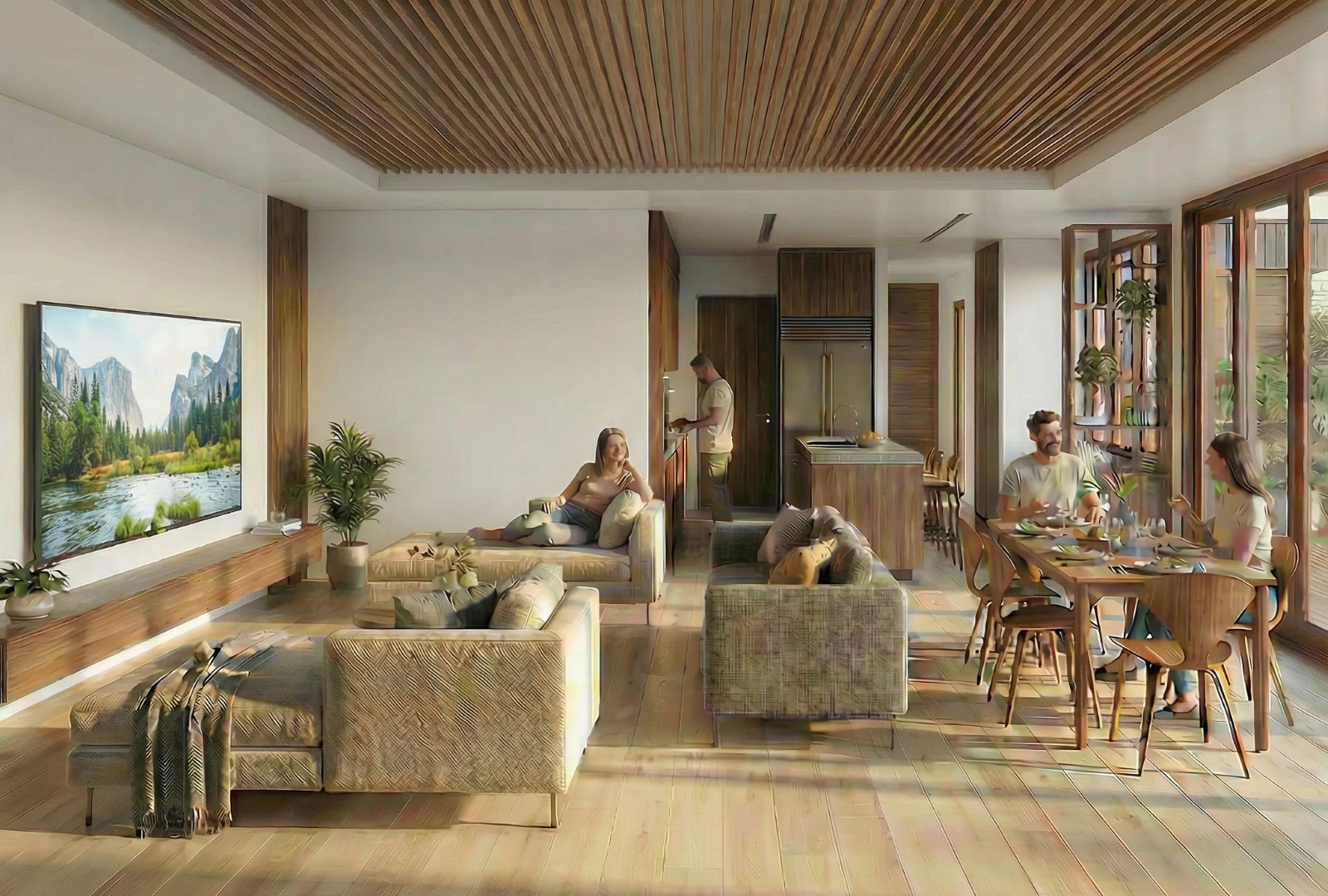
The central open-plan living area is organised beneath double-volume ceilings, creating a sense of height that makes the 206m² home feel considerably more generous than its footprint suggests. Ceiling heights step between 2.7 metres in the bedroom wings and the full volume in living areas, establishing a spatial hierarchy that defines each zone without resorting to walls. Warm timber flooring throughout living spaces contributes acoustic and thermal benefits, while Hebel panel infill within the suspended floor structure eliminates the hollow feeling common to framed floors.
The glazing strategy responds deliberately to Brisbane's subtropical climate. Every window is positioned to capture specific views, admit northern light, or facilitate cross-ventilation — large-format glazing opening the living areas to carefully framed outlook, while louvre windows allow fine-grained control of airflow. Generous eaves provide summer shading without sacrificing winter sun penetration to the north-facing living spaces. Integrated solar power completes a passive design approach targeting minimal energy consumption.
The material palette — vertical Colorbond cladding, timber slat screening, and glazed balustrades — is chosen to age gracefully and require minimal upkeep, consistent with the brief. Early collaboration with the builder through an ECI arrangement brought cost and constructability considerations into the design process from the outset, ensuring the technical complexity of the site was accounted for before it could become an obstacle.
The result is a home shaped by its constraints as much as its brief — architecture that resolves a genuinely difficult site while remaining focused on how the clients want to live.
.jpg)
.png)
Ready to begin your home design journey?
Request a Consultation