Financing Sustainable Architecture: Aligning Architectural Vision with Smart Capital
Financing Sustainable Architecture: Aligning Architectural Vision with Smart Capital
Designing a sustainable home isn't just about reducing your carbon footprint—it’s a direct strategy to improve indoor comfort and dramatically lower the ongoing operational costs of running your property. Features like passive design, high-performance insulation, integrated solar power, and energy-efficient climate control transform a residence from an energy sink into a self-sustaining asset.
However, whether you are embarking on a custom new build or planning a major structural renovation, there is a crucial element that must be integrated into the blueprint from day one: How will the project be financed?
To bring a climate-responsive home to life without budget friction, design strategy and financial planning must progress hand-in-hand. Below, Quorum Studios and Zoe Kowalski (Mortgage Broker at MLN Finance) break down how architectural design principles and specialised lending structures come together to deliver sustainable, long-term value.
1. The Architectural Perspective: Design Strategies for Climate Responsiveness
At Quorum Studios, we view sustainable design not as an expensive add-on but as a core architectural responsibility. By prioritising climate-responsive principles early in the concept phase, we optimise the building’s microclimate performance, reducing reliance on mechanical heating and cooling.
Key Architectural Pillars
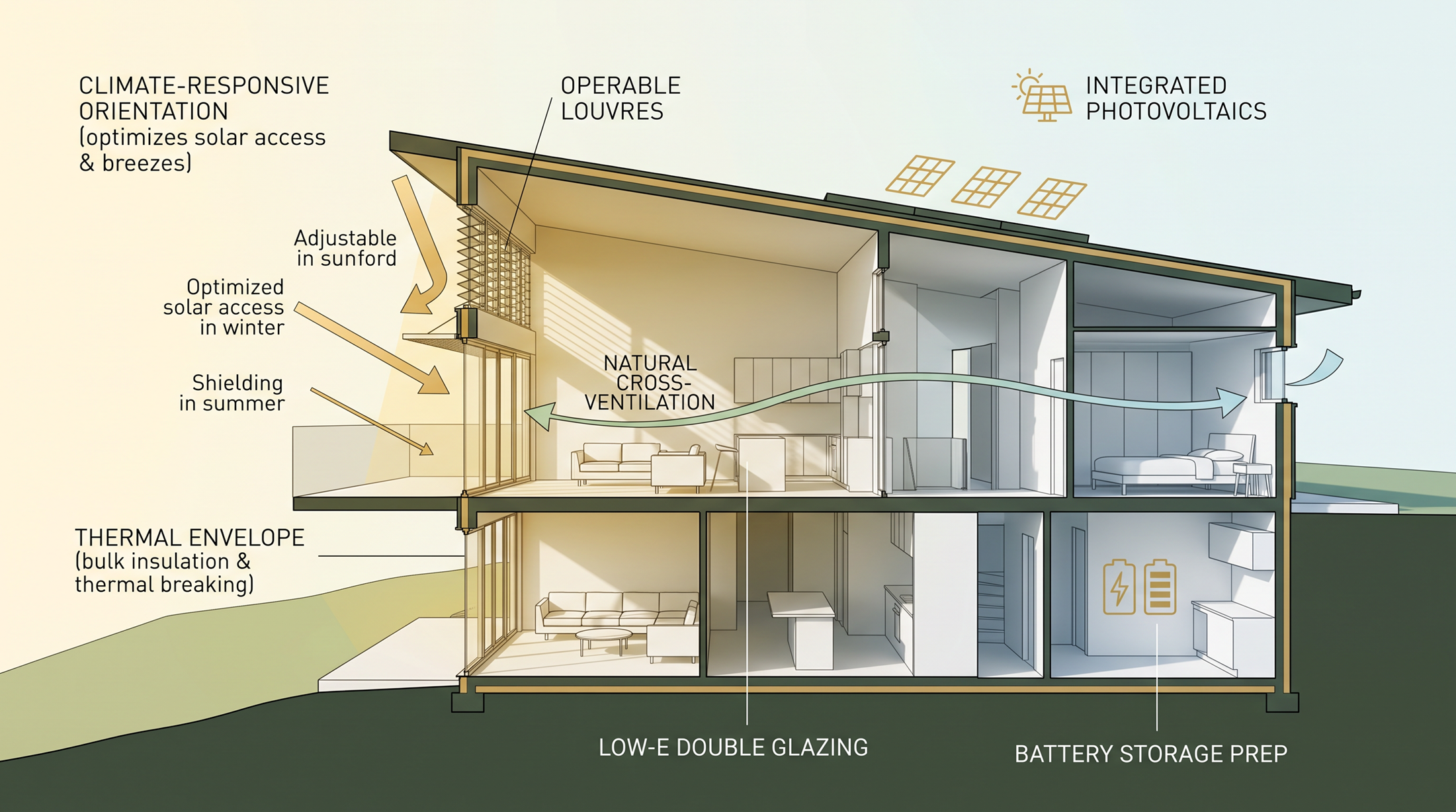
- Passive Cooling & Orientation: Designing floor plans to capture prevailing breezes and shielding high-exposure eastern and western walls significantly cuts heat load. Deep eaves, operable louvres, and strategic room zoning allow natural cross-ventilation.
- Thermal Envelope & Insulation: Upgrading roof sarking, bulk wall insulation, continuous air sealing, and double-glazed or thermally broken windows prevents thermal bridging—keeping indoor temperatures stable year-round.
- Integrated Photovoltaics & Systems: Solar panels and battery storage are most effective when designed into the roof form upfront, rather than retrofitted, ensuring optimal tilt, maximum solar yield, and seamless aesthetic integration.
2. The Financial Perspective: Green Loans, Equity & Construction Funding
While high-performance materials and sustainable features can require a higher initial capital outlay, the Australian lending market has evolved to reward energy-efficient builds. Understanding your borrowing capacity, available equity, and green loan options early allows you to establish a realistic design budget before architectural plans are finalised.
Specialised Green Home Loans
Lenders increasingly recognise that energy-efficient homes have lower ongoing running costs, making homeowners less vulnerable to energy price spikes. Discounted interest rates and special terms may be available based on:
- The home’s NatHERS energy rating (Nationwide House Energy Rating Scheme).
- Fully electric infrastructure (moving away from gas).
- Solar capacity, battery storage, and heat-pump hot water systems.
- High-performance insulation and double glazing.
Discounted green mortgage rates can lower your long-term interest expenses, while dedicated green upgrades loans allow you to finance smaller sustainable improvements (EV chargers, solar retrofits) at favourable rates.
Understanding Construction Loans vs. Equity Access
Depending on the scope of your project, financing typically falls into two main categories:
- Construction Loans (New Builds & Major Renovations): Funds are released progressively across key building stages (Slab, Frame, Lock-up, Fixing, and Completion). Lenders assess the cost of the project against the expected "as-complete" valuation. Because spending an extra $100,000 on high-end eco-finishes does not automatically increase the bank valuation by $100,000, establishing your cash reserve and contingency upfront is vital.
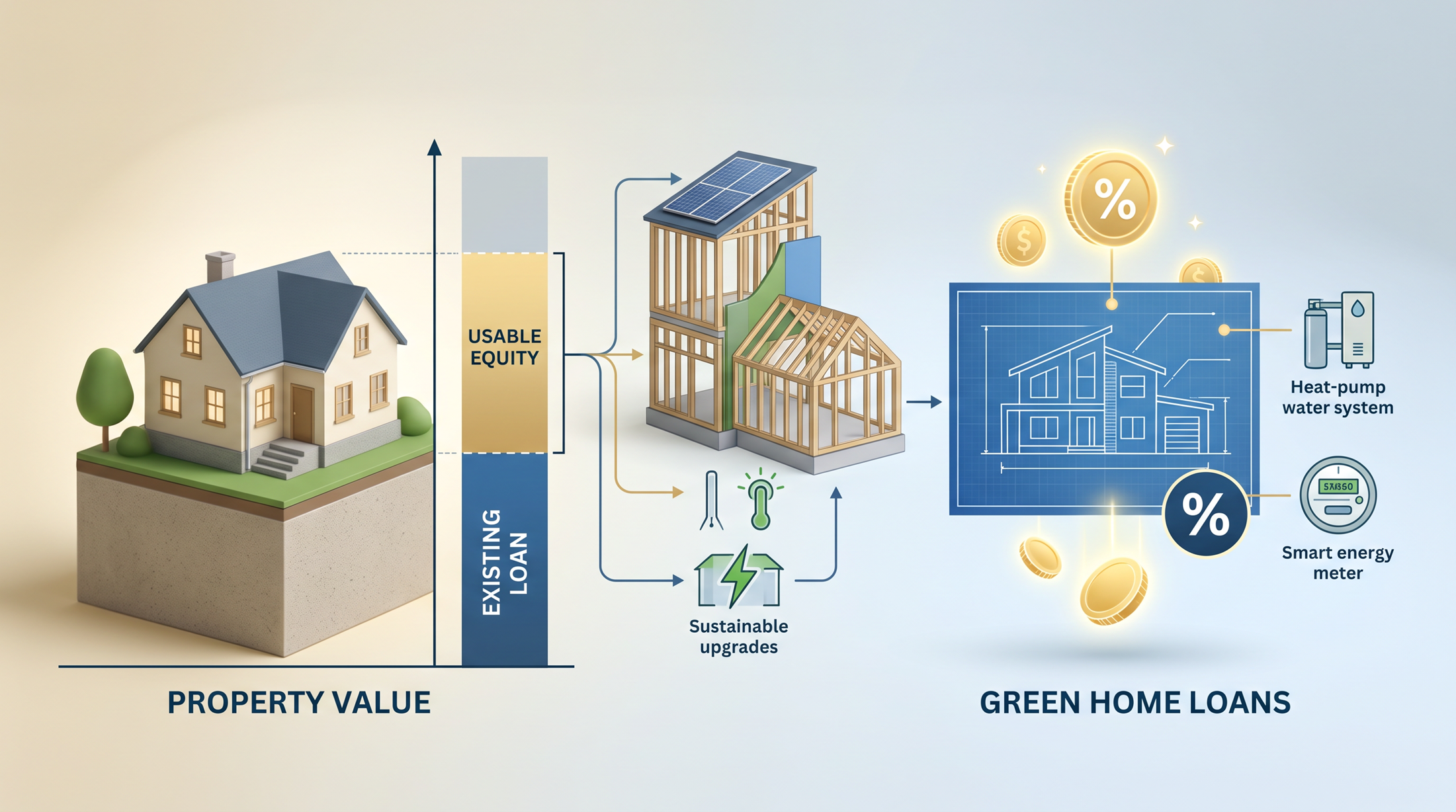
- Utilising Home Equity (Renovations & Extensions): If you own an existing property, you can leverage usable equity to fund sustainable upgrades.
Equity Calculation Example:- Property Value: $1,000,000 | Existing Loan: $500,000
- Max 80% LVR: $800,000
- Potential Usable Equity: $800,000 – $500,000 = $300,000
- Note: Final approval depends on income, borrowing capacity, living expenses, and project scope.
3. Why Financial & Architectural Collaboration Matters Early
Waiting until architectural plans are finished before speaking to a mortgage broker is one of the most common causes of project delay and budget stress.
By initiating conversations with Quorum Studios and Zoe Kowalski at MLN Finance simultaneously during the early concept phase, you establish a solid framework:
- Clear Financial Boundaries: Know your borrowing capacity, usable equity, and required cash buffer before design begins.
- Value-Add Prioritisation: Your architect can allocate your budget towards high-impact sustainable design elements that boost lifestyle comfort while aligning with lender valuation expectations.
- Optimised Loan Structures: Ensure your chosen design features align with specific green loan criteria to unlock lower rates or government rebates.
Building sustainably? Start with the finance conversation early
Whether you're building a sustainable home, renovating your existing property or considering a major extension, you don't have to wait until the plans and building contract are complete to start looking at finance.
An early conversation can help you understand your borrowing capacity, available equity and potential financing options before you commit to the final scope of your project.
If you're considering building or renovating and would like to understand what your finance options could look like, get in touch with Zoe to start the conversation.
This information is general in nature and does not take into account your individual objectives, financial situation or needs. Lending criteria, eligibility requirements, interest rates, government incentives and rebates can change. Your individual circumstances should be assessed before proceeding with any finance product.
Website: MLN Finance | Reviews: About me + Reviews | Contact: Email me

Ready to begin your home design journey?
Request a Consultation